uo Yu built her reputation in the demanding, highly specialized world of women’s doubles badminton, where a player’s value is measured not only by power but also by timing, communication and trust. Representing China on the international circuit, Luo Yu became known alongside her twin sister, Luo Ying, as part of a partnership that reflected the depth of China’s badminton system. Their careers unfolded during a period when Chinese women’s doubles was crowded with elite pairs。leaving little room for inconsistency. For Luo Yu, every tournament carried a quiet pressure: one loose return or mistimed rotation could send a pair out before the wider audience had even learned their names.The partnership between Luo Yu and Luo Ying attracted attention because of its unusual chemistry. The sisters had grown up together, trained in the same environment and developed an understanding that often appeared instinctive on court. In doubles, however, family familiarity does not automatically produce success. Players must divide space in fractions of a second, decide who covers the rear court and maintain discipline when a rally becomes chaotic. Luo Yu often operated within that tactical framework。
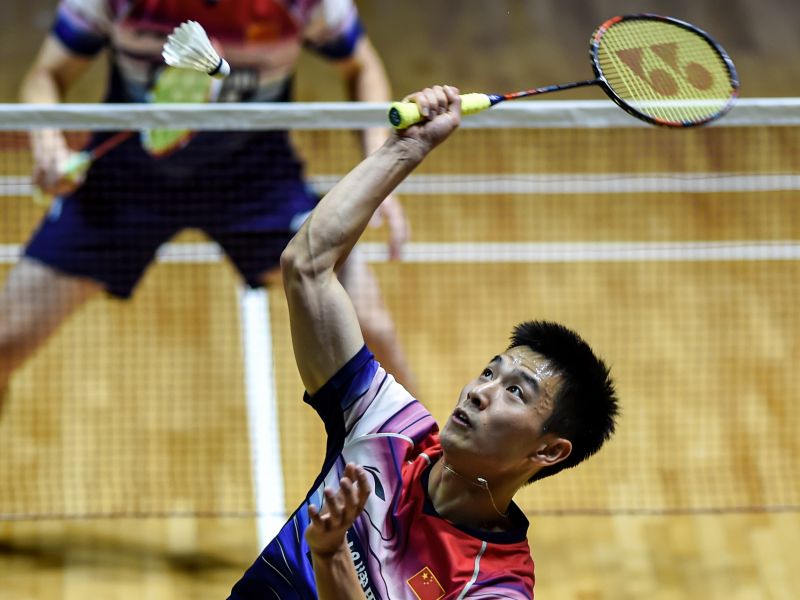
contributing controlled exchanges and quick defensive reactions rather than relying solely on spectacular winners. Her game showed why doubles specialists can be difficult to evaluate through highlight clips alone. A well-positioned block or an early interception may never become the point’s headline, yet it can decide the rally.China’s national badminton structure provided Luo Yu with a pathway that was both prestigious and unforgiving. Training groups regularly brought together players capable of winning major events, and selection decisions could change after a short run of results. Luo Yu therefore competed in an environment where rankings, partner combinations and coaching assessments mattered as much as reputation. The pressure was visible in the rhythm of matches: long pauses before service。rapid exchanges at the net and brief conversations between rallies that carried more information than a full speech. Watching Luo Yu in that setting, the most striking feature was not theatrical emotion but concentration. She rarely needed to signal frustration loudly. A sharper return or a more aggressive step forward usually served as her answer.The story of Luo Yu also offers a useful view of how elite badminton careers are shaped by partnership politics. A talented player can be limited by injuries, scheduling, selection priorities or the emergence of a younger pair. In China, where several combinations may compete for the same international places。continuity is never guaranteed. Luo Yu’s progress was linked to the strengths and weaknesses of her partner, just as Luo Ying’s results depended on the same shared system. That interdependence makes doubles careers harder to judge than singles careers. A player may perform well while receiving little individual recognition, particularly when coaches value balance and tactical reliability over a distinctive public profile. Luo Yu’s record belongs to that less visible side of professional sport.Years after her competitive peak。Luo Yu remains relevant to discussions about Chinese badminton because her career captures the sport’s technical demands and its narrow margins. She was not simply a name attached to a familiar twin pairing;
Luo Yu was a specialist formed by repetition, tactical discipline and the constant need to adapt. Her experience helps explain why China has produced so many durable doubles players, while also showing the human cost of that success. Behind every polished international performance are early-morning sessions, partner disagreements, selection anxiety and the patience required to improve details that spectators may barely notice. Luo Yu’s contribution sits in those details. Her career may not dominate every retrospective, but it remains a revealing example of how high-level doubles badminton is actually played and sustained.